Resolve routine tickets; prepare the difficult ones for a person
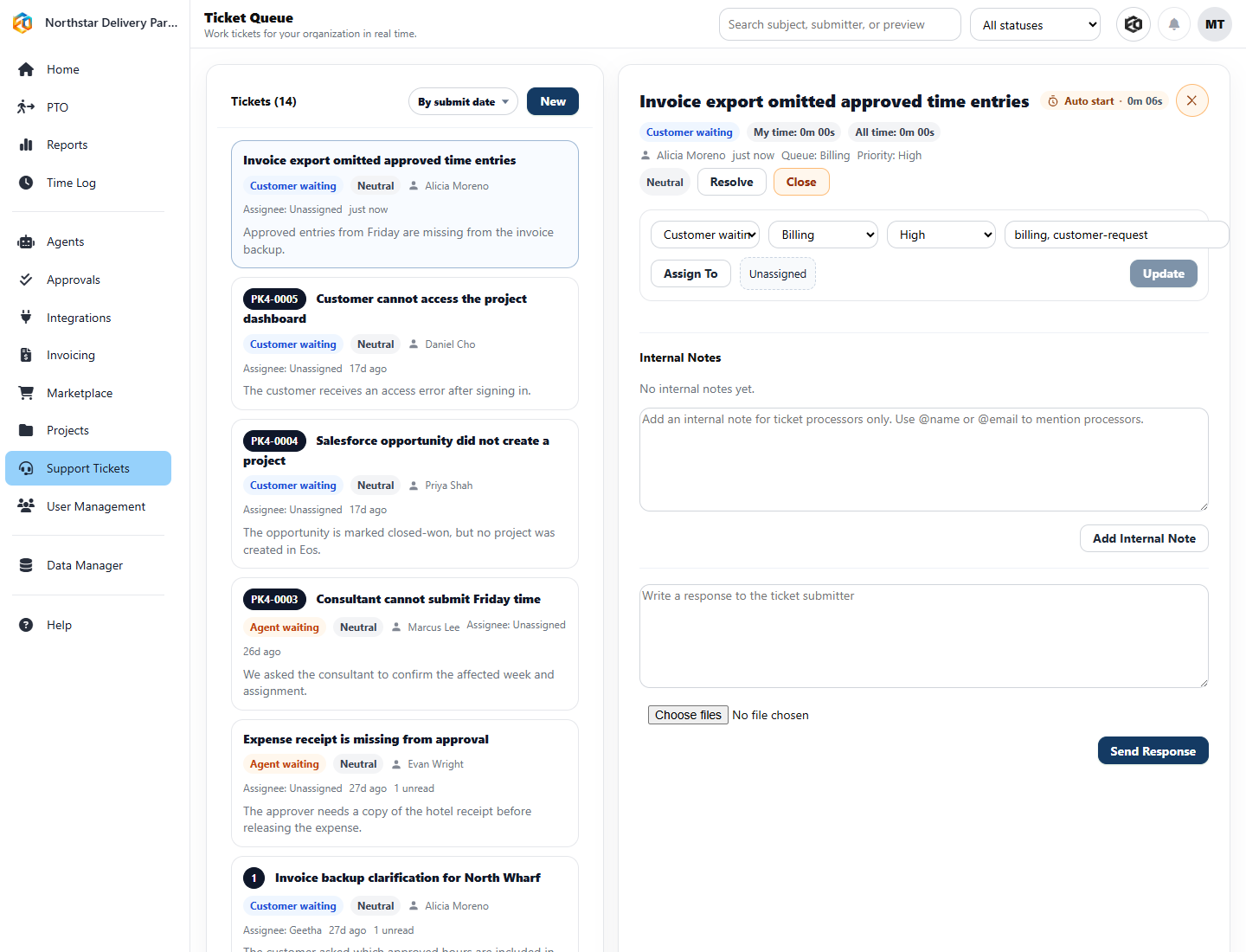
The Ticket Resolution Agent classifies incoming work, gathers project and customer context, sets priority and ownership, prepares or sends the reply, follows up, and closes low-risk tickets when the closure conditions are met.
Two templates, because trust is not one-size-fits-all
The supervised template requests approval before consequential actions. The low-risk automation template can send replies, change priority, assign ownership, update status, and close tickets that match your approved playbooks. Anything outside those boundaries waits for review.
Native Eos ticket context
The Agent can use queue, priority, sentiment, customer messages, internal notes, assignee, time, linked projects, and prior activity. Jira Cloud actions are also available for teams that keep delivery work there.
Resolution is more than writing a pleasant reply
Understand
Classify the issue, inspect its history, and collect the records needed to make a decision.
Act
Route, assign, update, answer, create follow-up work, or request approval.
Verify
Recheck waiting tickets, escalate stalled work, and close only when the configured conditions are satisfied.
Bring three tickets: routine, ambiguous, and risky
That is usually enough to show where automation belongs and where it does not.